Sugarbeet
From breakfast table to fuel tank – the many uses of the sugarbeet
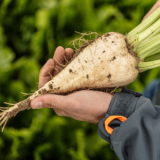
Numerous products are made from seed from our Business Unit Sugarbeet. Because sugarbeet has many more uses than simply sweetening our food.

The way to the customer
After the harvest, sugarbeets are processed in sugar factories. There, the sugar is extracted from the sugarbeets. Afterwards, it is either sold in supermarkets directly or used in a wide range of other products. Only a small portion of the sugar ends up as table sugar on supermarket shelves. The largest share is further processed by the food industry.
Sugarbeet is a true circular economy wonder: besides sugar, processing also produces sugarbeet pulp and molasses, which are used as valuable animal feed, for example. Lime sludge, which accumulates during processing, is returned to the fields, recycling important nutrients back to where it all began.
A fact that few people know: Sugarbeet sugar can also be used to produce ethanol. One metric ton of sugarbeets provides enough raw material to produce up to 100 liters of renewable fuel. Furthermore, sugarbeets can be used to generate renewable energy in biogas plants.

Products
- Marmalade
- Cookies and baked goods
- Drinks
- Ice-cream
- Medicine and pharmaceutical products
- Bioethanol
- Energy from biogas
- Animal feed

Insider knowledge
Sugar does not just sweeten foods, it also helps preserve them by inhibiting the growth of microorganisms, thereby extending their shelf life.
It is expected that sugar consumption will increase worldwide because of the growing population and changing consumer habits. Imagine a freight train loaded with the expected demand growth of approximately 25 million metric tons of sugar. This train would have a length of about 13,000 kilometers. That is roughly the distance between Central Europe and South Africa.
Key figures
- In the KWS portfolio since: 1856
- Varieties worldwide: >350
© KWS SAAT SE & Co. KGaA 2026